In the ever-evolving landscape of video gaming, updates and patches are typically heralded as saviors, rescuing titles from bugs and enhancing user engagement through new content. Yet, as history has shown, these well-intentioned interventions can sometimes spiral into disasters, fracturing player communities and tarnishing once-beloved games. From combat overhauls that alienate loyal fans to technical glitches that render games unplayable, certain updates serve as stark reminders that innovation must be tempered with caution. As of 2025, these incidents remain cautionary tales in the gaming industry, underscoring the delicate balance between progress and preservation.
Runescape: The Evolution of Combat Fiasco
Developed by Jagex in the early 2000s, Runescape captivated players with its open-world MMORPG set in Gielinor, where adventurers carved their own paths through quests and exploration. However, the introduction of the Evolution of Combat update aimed to revolutionize the game's fighting mechanics but instead ignited a firestorm of discontent. Players who had grown attached to the original system felt betrayed, as the overhaul disrupted the familiar rhythm of battles. This update was like replacing a cherished vinyl record with a digital remix—it modernized the sound but stripped away the nostalgic warmth that defined the experience. Fortunately, Jagex responded by launching Old School Runescape, restoring the classic combat and offering a choice between editions. Still, the damage was done: many veterans argue that the update irreparably fragmented the game's soul, turning a unified community into divided factions.
Destiny 2: The Sunsetting Debacle
Bungie's Forsaken DLC for Destiny 2 brought a wealth of new content, including exotic weapons and challenging raids, but it also introduced the controversial "sunsetting" feature. This mechanic capped the infusion levels of weapons and armor, forcing players to abandon their hard-earned gear for new acquisitions to tackle endgame activities. The backlash was immediate and fierce, as gamers felt their progress was invalidated overnight. The update was akin to a gardener uprooting mature trees to plant saplings—it promised growth but left the landscape barren of familiar landmarks. 😠 In response to player outcry, Bungie removed sunsetting in the Final Shape DLC, allowing older gear to be upgraded. Yet, the temporary upheaval eroded trust, with many citing it as a prime example of how updates can undermine player investment and loyalty.
Far Cry: The Wall-Piercing Nightmare
Crytek's original Far Cry immersed players in a South Pacific jungle, where protagonist Jack Carver battled mercenaries to rescue a journalist. However, patch 1.4 unleashed an unintended bug that allowed enemies to see and shoot through walls, transforming stealth missions into impossible death traps. Players were eliminated before they could react, shattering the game's immersion and fairness. This glitch was like a magician revealing all the tricks mid-performance—it exposed the mechanics in a way that destroyed the illusion and fun. 😓 A swift follow-up patch resolved the issue, but the brief period of chaos highlighted how even minor updates can introduce catastrophic flaws, leaving a lasting scar on the game's reputation.
Super Smash Bros.: Bayonetta's Dominance Dilemma
As a crossover fighting game featuring characters from various franchises, Super Smash Bros. thrived on balanced, frantic battles where players aimed to knock opponents off stages with unique combos. The addition of Bayonetta in the WiiU version, however, tipped the scales disastrously. She was overpowered, enabling skilled users to execute one-combo eliminations that dominated online matches and tournaments. Discussions flared about potential bans, and the update was like injecting a supercharged engine into a vintage car race—it accelerated the competition but rendered other contenders obsolete. 😤 Nintendo eventually patched Bayonetta to reduce her potency, restoring equilibrium. Nonetheless, the episode demonstrated how character imbalances in updates can alienate players and disrupt competitive integrity.
Star Wars Galaxies: The Jedi Profession Catastrophe
Set in the expansive Star Wars universe, this MMORPG allowed players to forge their destinies through diverse professions, building a vibrant in-world economy. The Trials of Obi-Wan expansion added hours of content but, a week later, overhauled the character development system by making Jedi a starting profession. This sudden change collapsed the economy and decimated the player base, as veterans felt their achievements were devalued. 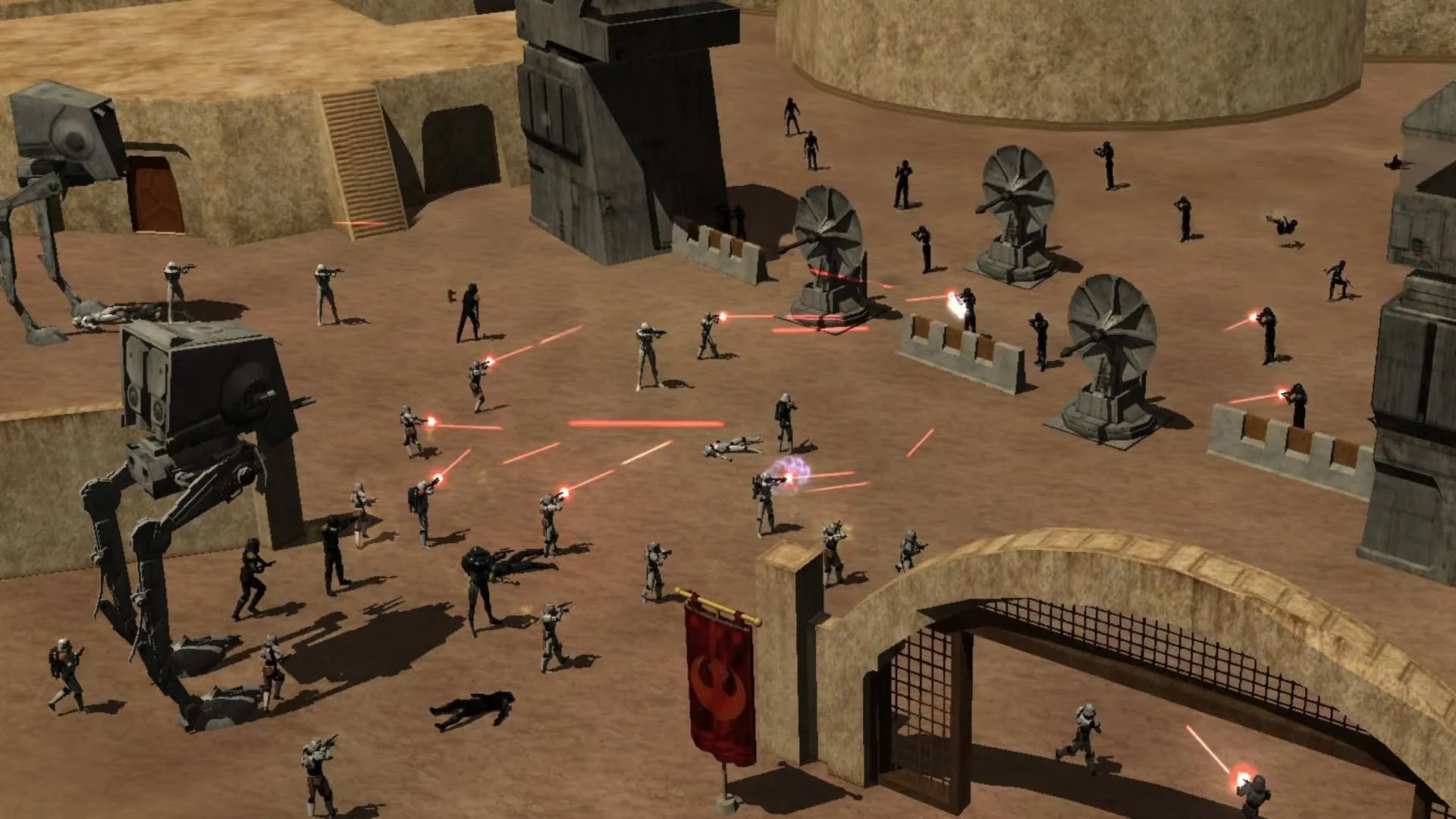 The update resembled introducing an invasive species into a fragile coral reef—it disrupted the ecosystem so severely that recovery was impossible. 😢 With refund requests flooding in and player counts plummeting, developers later expressed regret, cementing this as a textbook case of how updates can ruin a game's core dynamics.
Forza Horizon 4: The Game-Breaking Black Screen
Praised for its stunning open-world rendition of Great Britain and exhilarating driving mechanics, Forza Horizon 4 offered races, stunts, and collectibles that thrilled fans. However, a May 2021 update proved disastrous: a 7GB download caused the game to crash, leaving Xbox players with a black screen and automatic shutdowns. 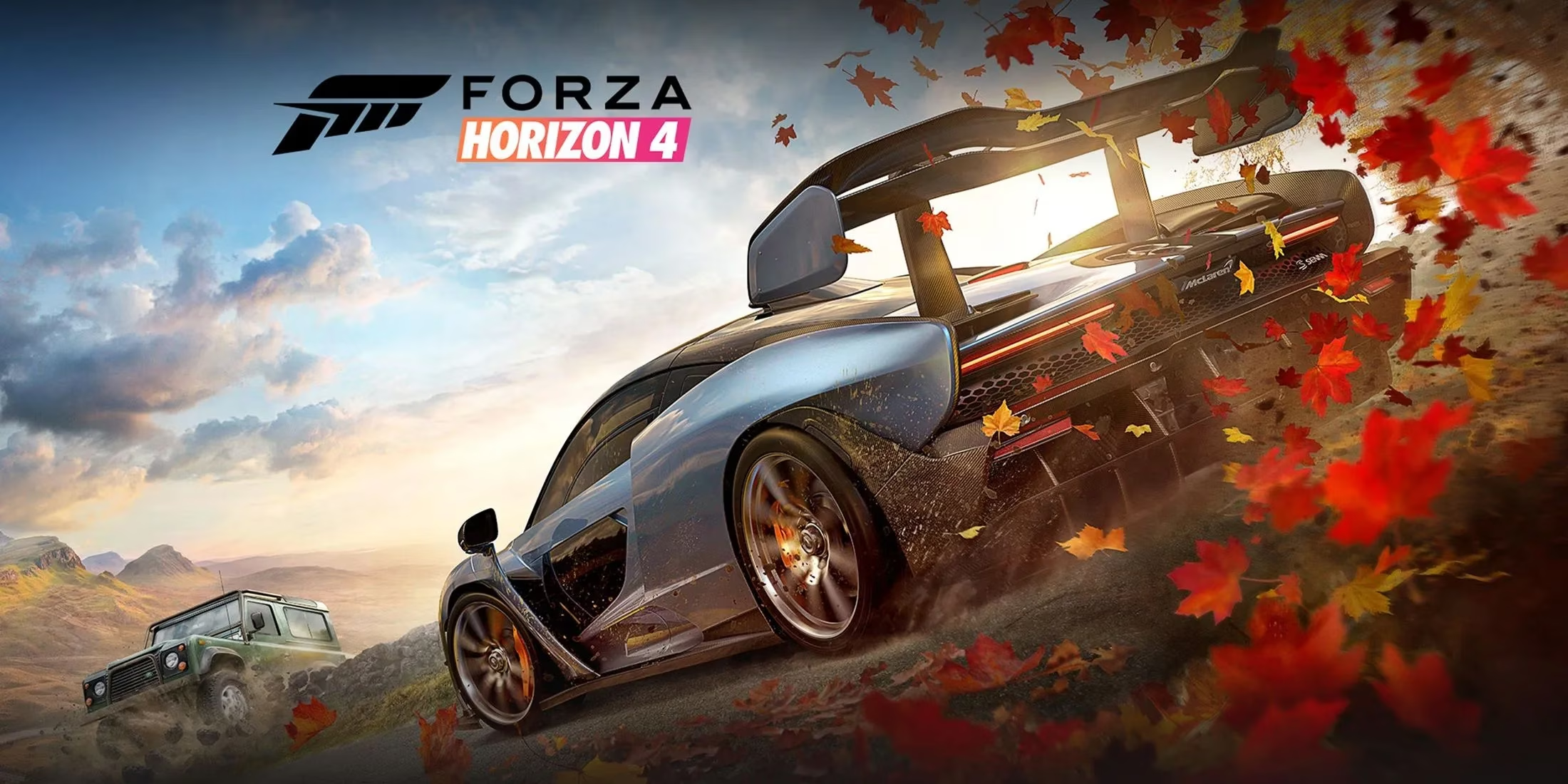 This wasn't just an inconvenience; it rendered the game entirely inaccessible, like a key snapping off in a lock during a grand heist—it halted all progress abruptly and infuriated the community. 😠 A patch released days later fixed the issue, but the incident topped lists of updates that ruined games, emphasizing how technical oversights can shatter player access and enjoyment.
Lessons Learned and Industry Reflections
Reflecting on these cases in 2025, the gaming world continues to grapple with the dual-edged sword of updates. Key insights from these failures include:
-
Thorough Testing is Non-Negotiable: Updates must undergo rigorous QA to prevent game-breaking bugs, as seen in Far Cry and Forza Horizon 4. 🧪
-
Community Feedback is Crucial: Listening to players, as Bungie and Jagex eventually did, can mitigate damage and restore faith. 🗣️
-
Avoid Radical Shifts: Drastic changes, like those in Star Wars Galaxies or Runescape, risk alienating loyal fans. ⚠️
A summary of the discussed games and their update issues:
| Game Title | Update/Feature | Core Problem | Resolution |
|---|---|---|---|
| Runescape | Evolution of Combat | Overhaul alienated players, disrupting combat | Old School Runescape launched as alternative |
| Destiny 2 | Sunsetting in Forsaken DLC | Forced gear abandonment, invalidating progress | Sunsetting removed in Final Shape DLC |
| Far Cry | Patch 1.4 | Enemies could see/shoot through walls | Quick patch to fix the bug |
| Super Smash Bros. | Bayonetta addition | Overpowered character, unfair advantage | Character nerfed in subsequent update |
| Star Wars Galaxies | Trials of Obi-Wan expansion | Jedi as starting profession, ruined economy | Player decline, developer regret |
| Forza Horizon 4 | May 2021 update | Game-breaking black screen bug | Fixed with a patch days later |
Ultimately, while updates often aim to breathe new life into games, they can inadvertently extinguish the very spark that made them special. As the industry advances, developers must wield these tools with care, ensuring that enhancements enrich rather than erase the player experience. 🎮