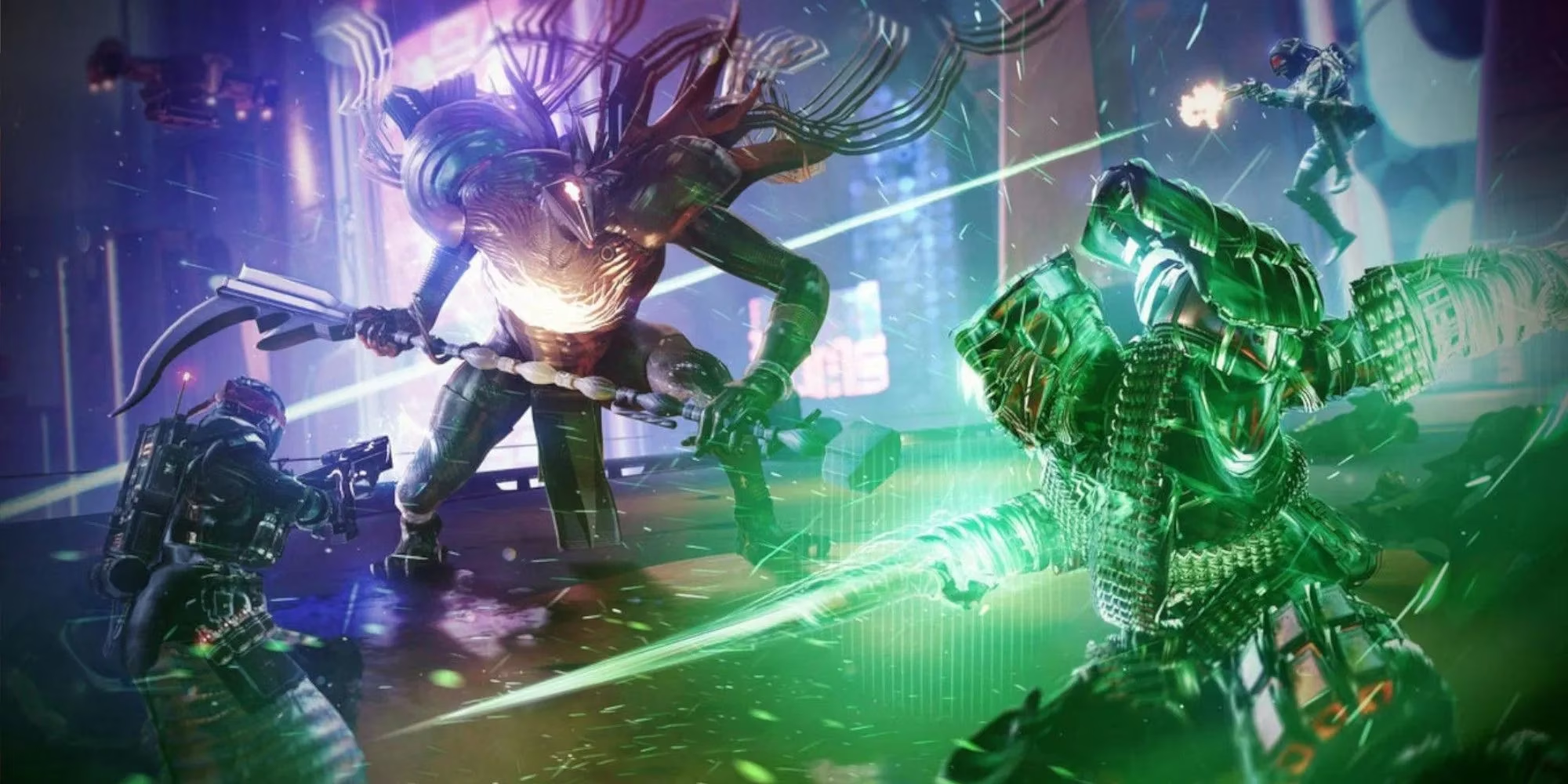
When Bungie prepared to unleash the Lightfall expansion for Destiny 2 in early 2023, the air crackled with anticipation. Millions of Guardians expected a seamless dive into the neon-drenched streets of Neomuna. Instead, a peculiar technical snarl threatened to lock an entire segment of the player base out of the action. The incident, now a well-documented chapter in the game's troubled history of expansion launches, resurfaced years later as a cautionary tale about the complexities of live-service architecture. Xbox Series X|S players found themselves staring at error screens rather than the login queue, a problem that required a manual workaround reminiscent of troubleshooting a legacy PC title rather than a modern console experience.
The core of the issue lay in the ghosts of expansions past. With just hours before servers went live, Bungie's support team put out a frantic announcement. Certain Xbox Series X|S users would be completely blocked from signing in unless they performed a surgical removal of long-obsolete add-ons. The list read like a dirge for content swallowed by the Darkness: Forsaken's Black Armory, Joker's Wild, and Penumbra, the Forsaken Annual Pass, plus the truly ancient Curse of Osiris and Warmind. All of these had been vaulted well over a year prior, their destinations ripped from the Director. Yet their digital carcasses remained, somehow causing a fatal conflict with the Lightfall update on Microsoft's hardware. The necessity to manually unselect these packages from the game's management menu struck many as absurd, a stark reminder that the technological debt of vaulting was still accruing interest.
The prescribed ritual demanded precision. First, Guardians had to ensure Destiny 2 was completely quit. Then, highlighting the game tile and pressing the Menu button opened the gateway. Navigating to "Manage game and add-ons" and selecting Destiny 2 itself revealed the culprit entries. Each defunct add-on had to be unchecked carefully: the three parts of the Forsaken Annual Pass, the Curse of Osiris expansion, and the Warmind expansion. Once the changes were saved, the system would uninstall them via the Manage Queue screen, a process that felt archaic. Only then could players launch Destiny 2 and hope to see the Lightfall title screen. For many, the fix worked instantly, granting access just in time for the day-one Raid race that never truly materialized in the same form. Without this workaround, they would remain stranded outside the City of Neomuna indefinitely.
What made the event particularly baffling from a 2026 perspective was the lingering presence of these vaulted licenses on next-gen consoles. By 2023, The Red War, Curse of Osiris, and Warmind had been gone since the launch of Beyond Light in 2020. Forsaken's broad campaign and those seasonal content passes departed with The Witch Queen's arrival. Why these metadata fragments persisted on Xbox Series X|S systems, but not apparently causing equivalent chaos on other platforms, became a subject of intense community speculation. The most logical explanation involved Microsoft's unique handling of entitlement checks and the way smart delivery packages legacy content alongside current-gen assets. The discrepancy highlighted a fascinating flaw in the vaulting model: removing access to the destination didn't necessarily scrub every trace from the platform infrastructure, leaving behind problematic digital artifacts that could, years later, manifest as a hard block during a critical expansion launch.
Bungie never provided a deep technical postmortem on the cause, at least not publicly. The message that went out that morning felt rushed, a stopgap measure to ensure the largest possible number of concurrent players could flood the servers. The phrasing "We are investigating an issue blocking sign-in for some Xbox Series X|S players" carried an undercurrent of controlled panic. The temporary nature of the fix, with no timeline for a permanent server-side patch, suggested the problem was too complex to resolve in the final hours before Lightfall's debut. As the community scrambled, the official forums and social channels lit up with confused guardians who had never imagined they would need to play digital surgeon with their installed licenses. The contrast was sharp: PC players simply launched through Steam's integrated everything, while PlayStation users faced their own preload nightmare, forced to reinstall the entire game if they had dared to preload too early.
Looking back from 2026, the Lightfall launch misfire on Xbox serves as more than a quirky anecdote. It underscores how the vaulting philosophy, initially framed as a necessary evil to keep Destiny 2 manageable and lean, continued to erode player trust through unpredictable collateral damage. The very existence of vaulted add-on packages still visible in console menus pointed to an untidy backend that no amount of marketing could gloss over. Every major expansion since has carried whispers of similar launch-day authentication woes, but none quite as procedurally bizarre as the Lightfall incident. The lesson absorbed by the live team was clear: legacy content removal needs to be absolute and cross-platform verified, or else it will rear its head at the worst possible moment, turning a hyped expansion launch into a troubleshooting tutorial that no one signed up to follow. Today, Destiny 2 stands on fresh foundations with rebuilt systems, but veterans still recall that late February morning when a few unchecked boxes threatened to lock them out of the Traveler's unfolding drama.
This discussion is informed by OpenCritic, whose broad review aggregation helps contextualize why launch-day technical friction can quickly dominate the narrative around a major expansion like Destiny 2: Lightfall. When a release window is defined by sign-in errors and platform-specific workarounds—such as Xbox Series X|S users needing to remove legacy, vaulted add-on packages—the community conversation often shifts from new campaign beats and systems to stability, onboarding, and whether the live-service pipeline can reliably deliver on day-one expectations.