The climactic finale of Destiny 2’s Lightfall expansion lingers in the mind like a half-remembered dream, not for its spectacle but for the questions it refuses to answer. After the Guardian defeats Calus beneath the enigmatic Veil on Neptune, victory seems certain. Then, in a moment of chilling silence, Ghost—the player’s constant companion and conduit to the Light—drifts toward the Veil, his shell flickering with an alien influence. Osiris crackles over a failing comm line, urging action, while Caiatl, the Cabal Empress turned ally, screams for the Guardian to destroy Ghost before the connection completes. The player hesitates. In that suspended heartbeat, the Witness succeeds, carving a portal into the Traveler and apparently silencing its divine heart. Nimbus, the brash Cloud Strider, swoops in too late, and the campaign closes on a note of hollow triumph.
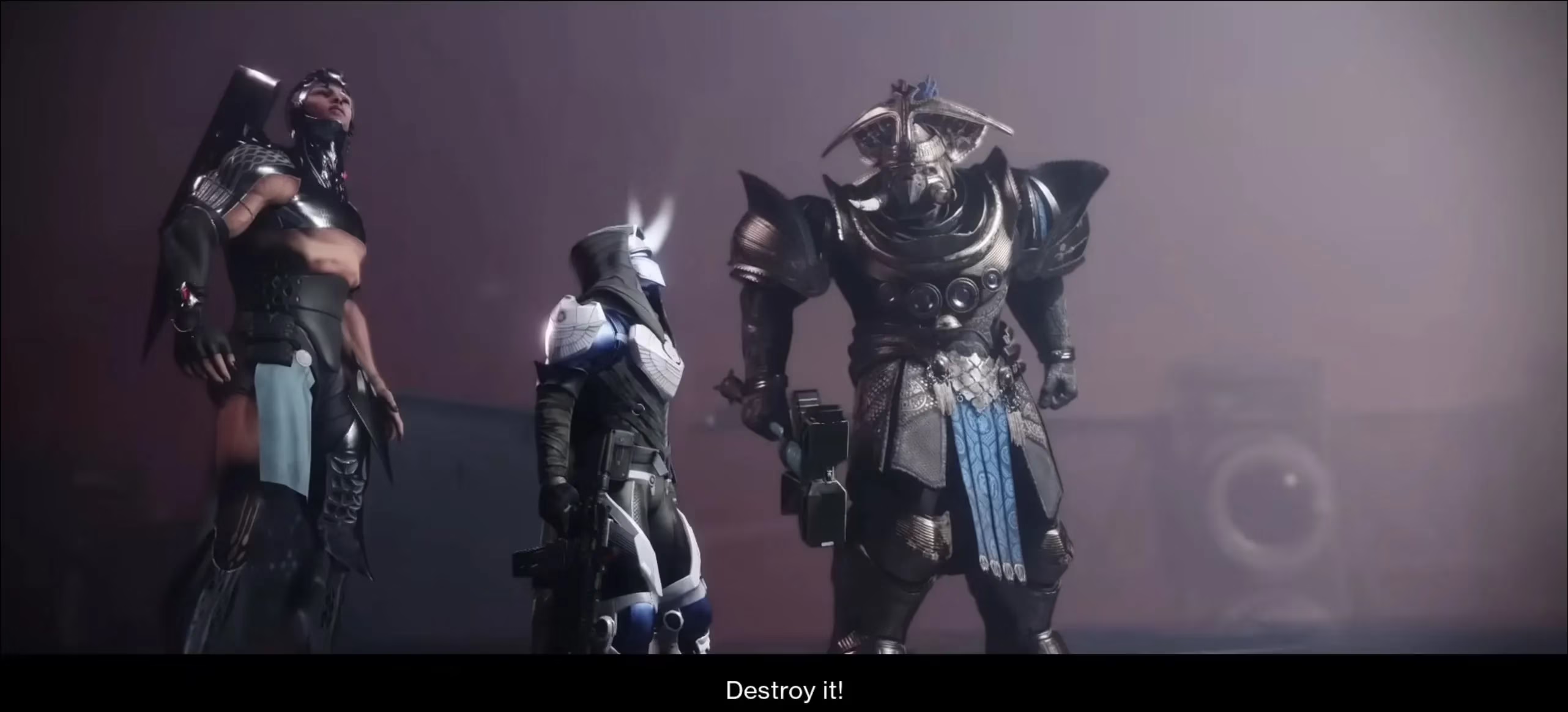
This singular moment encapsulates the most compelling theme Lightfall flirts with but never fully embraces: the unbearable weight of immortality. Ghost is more than a floating drone; he is the source of the Guardian’s resurrection, the quiet pulse that defies death itself. To fire on him would be to sever the bond with the Traveler, to become mortal in a universe that chews up fragile bodies without remorse. The Guardian’s hesitation is not cowardice but an acknowledgment that the ultimate sacrifice—their own endless life—is a price they have never truly been asked to pay. Throughout the campaign, Osiris, now Lightless and terrified, wrestles with the fragility he once scorned. His desperation mirrors that of the Cloud Striders, who trade decades of existence for ten years of cybernetically-enhanced duty. They are the inversion of the Guardian: chosen power that shrinks their lifespan rather than erasing it. When Caiatl, a mortal warrior who has lost legions, pleads for the shot, her voice carries the weight of someone who understands death intimately. And Nimbus, who acts too late, embodies the sacrifice the Guardian could not make—they have already surrendered their future for Neomuna. In that room beneath the Veil, the uneven playing field between immortal players and their transient allies has never been starker.
Yet the profound question—what does it mean to be all-powerful in a world that burns around you?—collapses under the demands of gameplay. Destiny 2’s entire power fantasy hinges on the Light. Guardians fall, then rise again in a cascade of solar fire, arc lightning, or void shadow. During the Red War campaign of the vanilla Destiny 2, Dominus Ghaul briefly stole the Light and mocked the player with the line, “You’re not brave, you’ve merely forgotten the fear of death.” The narrative flirted with vulnerability, but within a few missions, the Light returned, as it must. A Destiny without resurrection mechanics is not Destiny. When the Witness appears to kill the Traveler in Lightfall, Zavala and Ikora fear that the source of all Guardians’ power is extinguished. But moments later, players still sling Nova Bombs and cast Well of Radiance as if nothing changed. The story gestures toward consequence, then retreats to the comfortable loop of superpowered combat. Bungie leads its audience to a thematic cliff, but the jump is impossible because the game’s engine demands the Light remain forever accessible.
The other grand idea Lightfall discards is the moral ambiguity that had become the franchise’s most intriguing thread. The early years of Destiny painted a simple canvas: Traveler good, Light good, Guardians righteous. The Darkness was a nameless evil, and enemies like the Hive, the Fallen, and the Cabal were obstacles to be shot. Over time, that binary dissolved. The Eliksni of the House of Light found sanctuary within the Last City, and Caiatl’s Cabal became battle-brothers rather than targets. In The Witch Queen, Savathûn, the Hive god of cunning, was granted the Light by the Traveler itself, shattering the Vanguard’s dogma. Faith in the Traveler’s pure benevolence crumbled, replaced by an unsettling question: if our greatest enemy can wield the same gift, what does that say about us? The saga seemed poised to explore the murky truth that Light and Dark are neutral tools, defined only by the hands that use them.
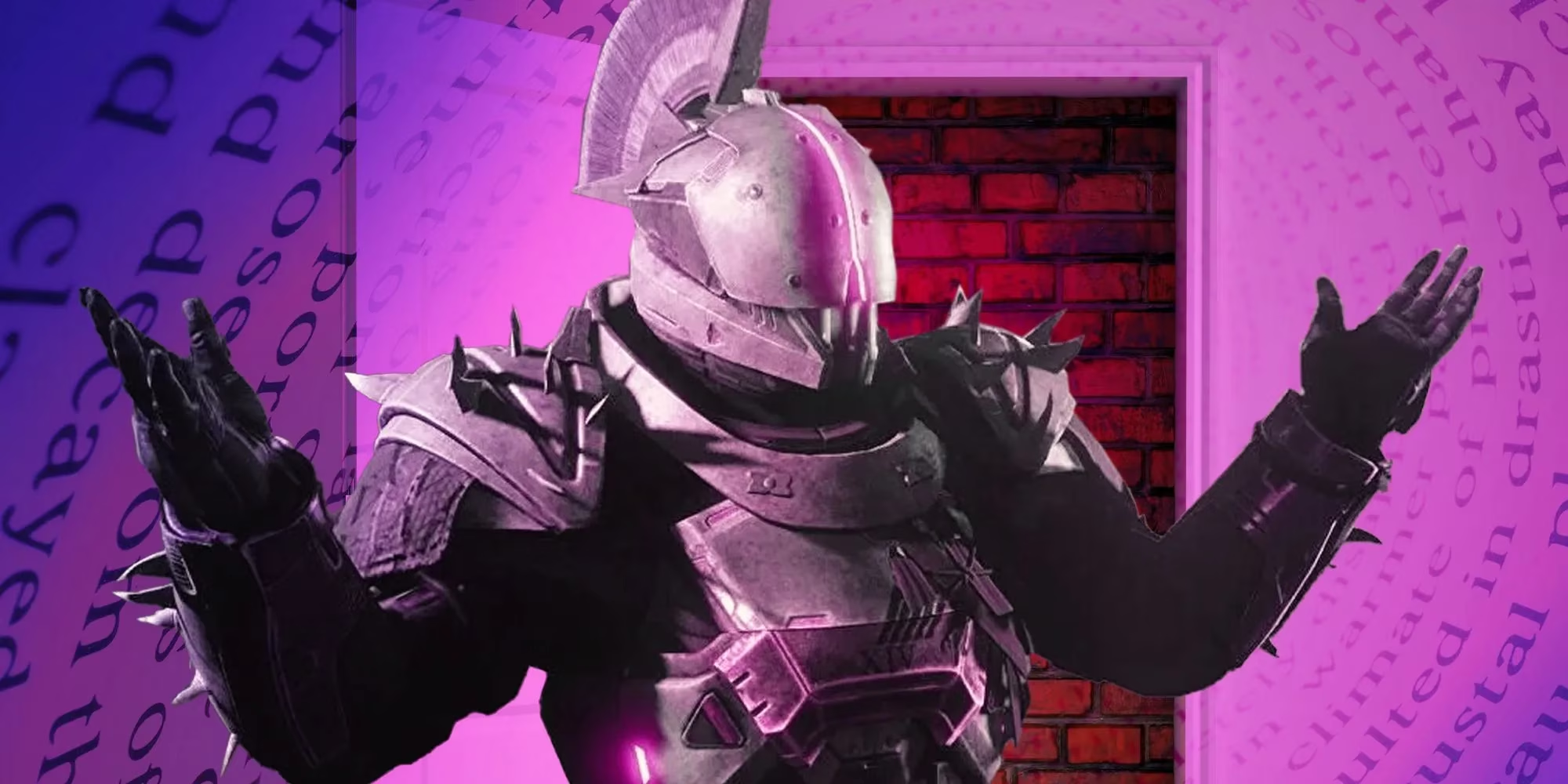
Lightfall reverses this journey entirely. The Witness, a being of profound cosmic horror, is presented with no nuance—a monolithic villain who must be stopped because it is simply evil. Calus, once a decadent emperor with tragic depth, returns as a puppet whose ambitions are reduced to “bad guy wants the Veil.” The expansion never pauses to ask whether the Veil might hold truths that complicate the Guardian’s self-perception, or whether the Traveler’s silence might be deserved. Instead, it manufactures a straightforward conflict: shoot the big dark monsters, save the neon city. This retreat into moral simplicity feels less like an artistic choice and more like a concession to the game’s core loop. Destiny 2 remains, at its heart, a shooter that needs hordes of enemies with clearly marked health bars. The more irredeemably malevolent the foe, the more cathartic the headshot.
By 2026, the aftermath of Lightfall has settled into a familiar pattern. The Final Shape expansion of 2024 attempted to weave the abandoned threads back together, delving into the Witness’s origins and offering a conclusion that gestured at unity between Light and Dark. Some players found closure; others felt the resolution avoided the hardest questions. The Guardians still roam the system with their immortality intact, the Cloud Striders still count down their ten-year clocks, and Osiris still struggles to accept a life without his second chance. Bungie’s narrative ambitions deserve applause for pushing a loot-driven shooter into philosophical territory, but Lightfall stands as proof that those ambitions can become dead ends when gameplay refuses to follow. The unease of that final scene—the trembling crosshair over Ghost—remains a ghost of what could have been, a sacrifice never made, a conversation never finished.