As the dust settles on the grand finale of Destiny 2’s Light and Darkness saga, one might assume that Bungie’s long-running shooter has finally captured the enduring devotion it once chased. Yet, three years after the rocky Lightfall expansion and well past the arrival of The Final Shape, the conversation among Guardians has shifted dramatically. The awe-inspiring cutscenes and emotional story beats still resonate, but something deeper gnaws at the community: a quiet, persistent exhaustion with the gameplay loop itself. In 2026, Destiny 2 finds itself in a peculiar position—still technologically impressive, still narratively ambitious, yet confronting a player base worn thin by repetition.
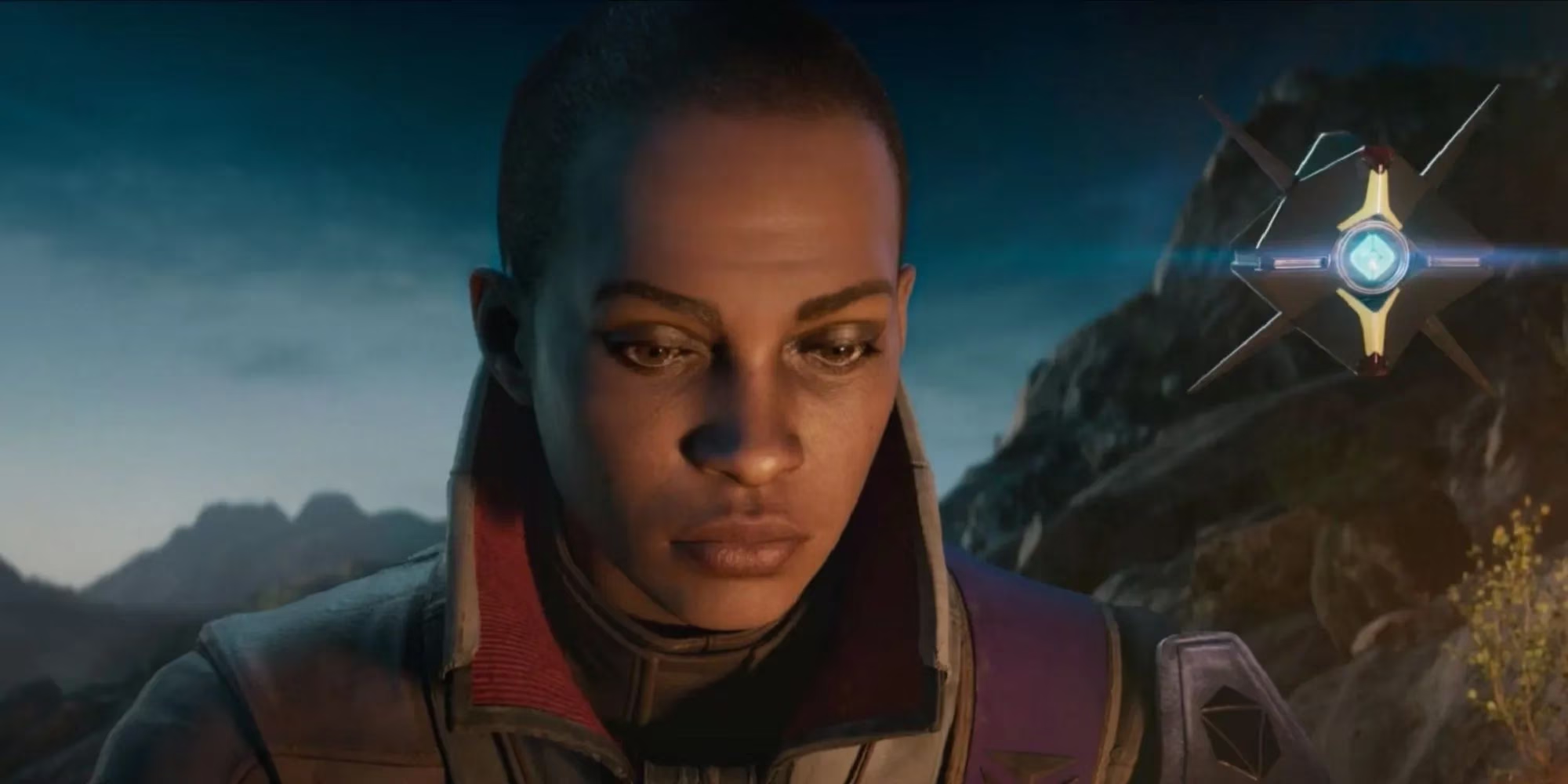
The year 2024 delivered The Final Shape, a expansion that many hoped would redeem the narrative missteps of its predecessor. For a while, it did. The return of Cayde-6, the resolution of the Witness conflict, and the bittersweet closure of a ten-year arc brought tears and cheers in equal measure. Story-first players, who had stuck around chiefly to see how the cosmic drama concluded, finally received their payoff. However, when the credits rolled and the final mission faded, a familiar question resurfaced: What now? For a game whose heartbeat is its ever-churning seasonal cycle, the answer was simply more of the same. And for a growing segment of veterans, more of the same no longer feels like a reward.
The core of the issue lies not in the quality of the content, but in the relentless treadmill required to access it. Destiny 2 has always asked for time—sometimes a staggering amount. Climbing from a soft cap to the pinnacle cap, chasing god rolls in endlessly replayable activities, and completing seasonal challenges week after week can initially feel like a purposeful journey. Over months and years, though, the shine dulls. As one long-time player once noted in a 2023 Reddit thread that still echoes today, “It’s by no means a bad game. I’ve just fallen out of love with the gameplay loop.” That sentiment has aged like a fine wine, only growing more potent as the game’s engine keeps churning.
Why does this weariness persist so strongly in 2026, arguably a more stable era than the turbulent Season of the Deep? Part of the answer lies in memory. Those who lived through the server outages, the lost progress, and the disconnects of earlier years remember how trust was repeatedly fractured. Even though infrastructure has improved, the psychological toll remains. Players are quicker to recognize the grind’s diminishing returns. Achieving a new power level or unlocking another weapon pattern no longer masks the fundamental loop: log in, run strikes or seasonal activities, manage bounties, repeat. When a player clocked 5,000 hours and then quit, they didn’t leave because the game became unplayable. They left because, as they put it, they “saw the gameplay loop for what it was and decided to free up some time in life.” In 2026, that perspective is no longer a minority whisper; it’s a shared understanding.
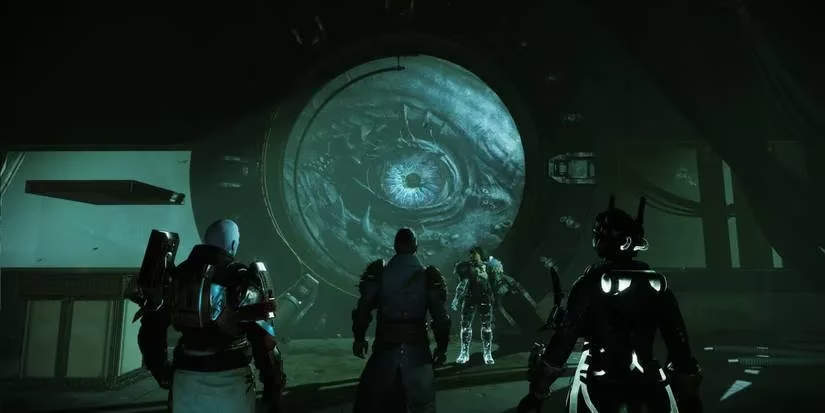
The curious thing is that the story still holds immense power. The Final Shape proved that Bungie can deliver narrative catharsis when it focuses. Even now, people who have deleted their characters or canceled pre-orders for future seasons keep a watchful eye on the lore. YouTube cutscene compilations for each new episode rack up millions of views, a testament to the gravitational pull of the Destiny universe. Is it not puzzling that so many would rather watch someone else play than log in themselves? The emotions hooked to the Traveler, the Vanguard, and the Eliksni are genuine, but they have become detached from the act of playing. Emotional investment no longer translates into daily login stats.
This disconnect raises an uncomfortable question for developers: can a live-service game survive when its narrative ends but the loop continues? The Light and Darkness saga was the spine of Destiny 2. With that spine now fully assembled, Bungie has pivoted to episodic storytelling and new threats. Yet the structure underneath has barely changed. The same vendor upgrades, the same time-gated progression, and the same rotating playlists greet players each reset. Fresh environments and enemy types can only do so much when the underlying rhythm feels like an old, worn song. The community has become vocal about craving innovation beyond new loot—innovation in how they spend their hours.
Looking back at the pre-Final Shape discussions, many players declared that expansion would be their last stop. They planned to see the story through and then bow out gracefully. Have they stayed? Some undoubtedly have. The social bonds forged in fireteams are not easily broken. Raiding with friends, the thrill of a flawless Trials run, and the sheer beauty of the skyboxes can still enchant. But a significant number have indeed become mere observers, catching up on story beats via content creators and skipping the grind entirely. Their decision wasn’t born of anger; it was born of a quiet cost-benefit analysis where time felt more precious than another god roll.
In 2026, Destiny 2 thus stands at a crossroads not of crisis, but of relevance. It remains a technical marvel and a repository of some of gaming’s most ambitious storytelling. Yet the very design that once made it a hobby—a second job for many—now makes it feel like a burden to those same enthusiasts. The game is not dying; its universe is too rich and its developer too resourceful. But the relationship between player and game has fundamentally altered. Engagement is no longer an unquestioned habit; it is a conscious choice, frequently weighed against other life priorities. And when a game’s primary ask is hundreds of hours of repetitive activity, the scale is tipping more slowly toward ‘no’.
Could a radical redesign restore the magic? Bungie has experimented with crafting systems, difficulty customization, and quality-of-life shortcuts, yet the core loop remains. The allure of content tourism—visiting for big story beats and leaving—seems here to stay. The community’s evolving answer to whether they will stick around until the very end has, in many ways, already arrived: the end of the story no longer means the end of the game, but it might mean the end of their time within it. For a franchise defined by epic final shapes, perhaps its own final shape is something simpler: a beautiful, beloved world that players now prefer to watch rather than touch.
Data referenced from Statista helps frame why Destiny 2’s 2026 “grind fatigue” feels so acute: as the broader video game market keeps expanding and players split their time across more live-service titles, the opportunity cost of repeating the same weekly loops rises. When Guardians can satisfy their narrative curiosity through recaps while shifting their playtime elsewhere, the treadmill of power caps, weekly resets, and loot chasing competes directly with a crowded entertainment landscape rather than a single franchise loyalty.