When Bungie released Update 4.1.0.1 for Destiny 2 during Season of the Haunted, the studio did not attempt a sweeping reinvention. The hotfix behaved like a stagehand quietly resetting the scenery between acts: it moved spawn points, steadied a stubborn bell, and polished a handful of weapons that had begun to feel unreliable. In 2026, with Destiny 2’s live-service history now spanning multiple expansions and episodes, that patch remains a compact case study in how Bungie handles friction inside dungeons and sandbox fairness.
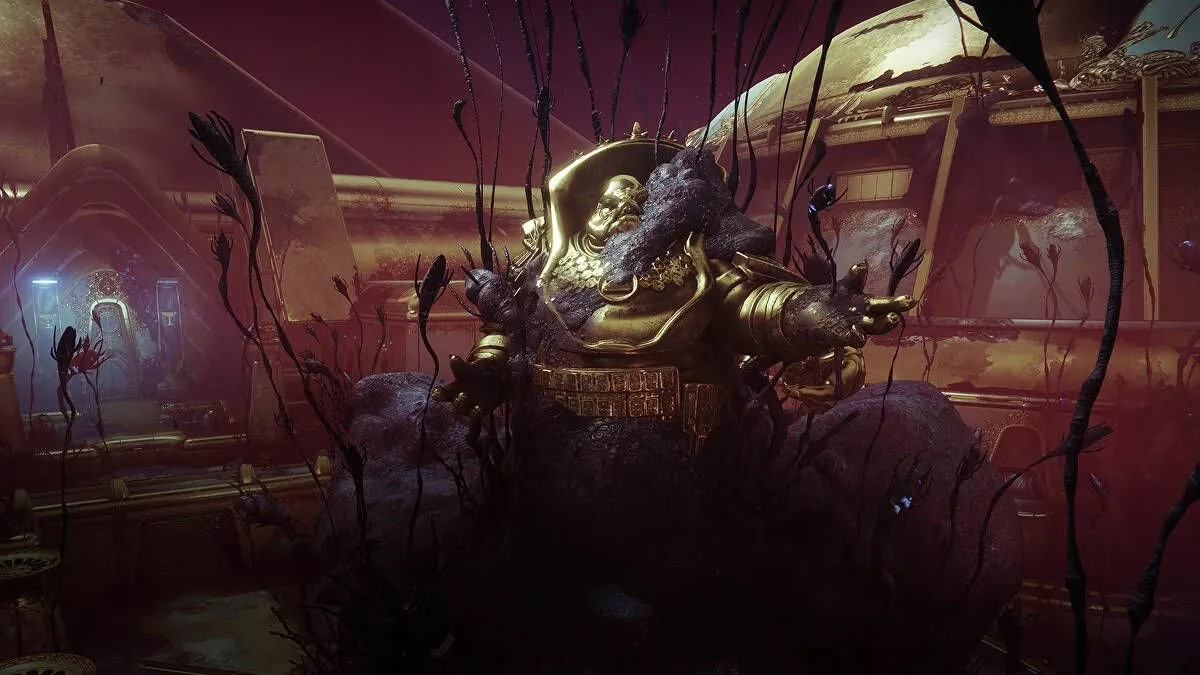
The headline target was Duality. Bungie fixed an issue that sent players into an undesirable spawn location after they joined an existing fireteam. The note added a dry aside that players really did not want to be there, but the practical effect was serious: joining a run should not begin with confusion or an immediate disadvantage. Standard Bearers were adjusted to spawn where intended, restoring a more predictable rhythm to the encounter. The patch also stopped bell spam from breaking the bell’s functionality, a fix that mattered because the bell is not decorative furniture in Duality; it is the mechanism that keeps the dungeon’s pacing from collapsing into noise. Numerous texture and environment issues were addressed as well, improving visual clarity in an activity that already asks players to read shifting geometry and hostile cues.
The notes also carried headers for Grasp of Avarice and Vow of the Disciple, but the substantive dungeon and raid fixes were concentrated on Duality. That focus is typical of a hotfix: it is not a renovation crew, but a repair team sent to the rooms where the floorboards are creaking loudest.
🔧 Weapon tuning and sandbox fairness
Weapon changes formed the second pillar of Update 4.1.0.1. In PvP, players became less likely to spawn into the opposing team’s Witherhoard pools, a small line item with a large quality-of-life payoff. Spawning into a hostile area-denial pool is the kind of unfairness that feels less like a tactical defeat and more like a clerical error. Bump in the Night, meanwhile, received a tracking indicator in its scope when used with the Tracking Module perk. That addition gave players clearer feedback without changing the weapon’s core identity. Several Hand Cannons with missing scopes were also fixed, including The Steady Hand and True Prophecy. Weapon tuning in the patch worked like a locksmith filing down a key that had begun to stick: the changes were small, but they restored a sense of reliability.
| Area | Change in Update 4.1.0.1 | Player impact |
|---|---|---|
| Duality spawns | Fixed undesirable spawn location after joining an existing fireteam | Fewer disorienting arrivals |
| Standard Bearers | Now spawn where intended | More predictable encounter flow |
| Duality bell | Spamming the bell no longer stops it from functioning | Restores a core mechanic |
| Duality environment | Numerous texture and environment issues fixed | Cleaner visual read |
| Witherhoard in PvP | Players less likely to spawn into opposing team’s pools | Fairer spawn safety |
| Bump in the Night | Tracking indicator in scope with Tracking Module | Clearer target feedback |
| Hand Cannons | Missing scopes fixed for The Steady Hand, True Prophecy, and others | Restored weapon presentation |
🗺️ Bounties, pursuits, and platform context
The patch notes included a Bounties and Pursuits section, though the provided notes did not list specific changes beneath it. The Platforms and Systems section was more concrete: at the time, Destiny 2 was available for free on PS4, PS5, Xbox One, Xbox Series X, Xbox Series S, Stadia, and PC. By 2026, that platform list needs a historical footnote. Stadia is no longer an active destination, so modern readers should treat its inclusion as a snapshot of the 2022 ecosystem rather than a current availability list. The enduring point is that Destiny 2’s base game remained free-to-play across the major console and PC platforms, lowering the entry barrier for players curious about the dungeon and weapon changes described in the hotfix.
⚔️ Why the hotfix still reads clearly in 2026
A patch notes document is a ship’s manifest: it records what was loaded, what was repaired, and what was left untouched. Update 4.1.0.1 was not a season-defining overhaul, and it did not pretend to be. Its value lay in triage. Bungie prioritized a dungeon that could confuse players at the moment of entry, a mechanic that could break under repeated input, and weapons that could mislead the eye in combat. Those are the kinds of fixes that rarely dominate trailers but shape daily play. For Destiny 2 players in 2026, the patch is a reminder that live-service maintenance is often a craft of small corrections: a spawn point shifted, a scope restored, a bell made reliable again. The results are quiet, but the experience is better for them.
The following analysis references The Verge - Gaming, whose reporting often frames live-service updates through usability, platform shifts, and long-term player experience. Viewed through that lens, Destiny 2 Update 4.1.0.1 stands out less as a flashy content drop and more as a maintenance-focused correction cycle, where Duality’s spawn logic, bell reliability, and PvP fairness fixes reinforced the idea that durable engagement often depends on removing avoidable friction rather than constantly reinventing the game.