When I load into the Tower and see Eva Levante waiting near the courtyard, I know the Solstice grind is about to take over my play sessions. In 2026, Destiny 2 has been through years of updates, expansions, and seasonal experiments, but the Event Card system that arrived with Solstice still feels like one of the cleanest ways Bungie has ever organized a limited-time event. It tracks challenges, activities, and rewards in one place. But is it actually player-friendly? That depends on how much you are willing to grind—and whether you are willing to pay.
The Event Card Is My Solstice Command Center
When Solstice begins at the weekly reset, I do not wander around aimlessly. I open the Director, go to the Quests menu, and navigate to the Event Card tab. If I am already in the Tower, I simply interact with Eva Levante. From there, everything is laid out: the challenges I can complete, the activities I can run, and the reward tiers I can earn. The free track gives me goals to chase just by playing. The paid track, however, is where the Event Card becomes a business decision.
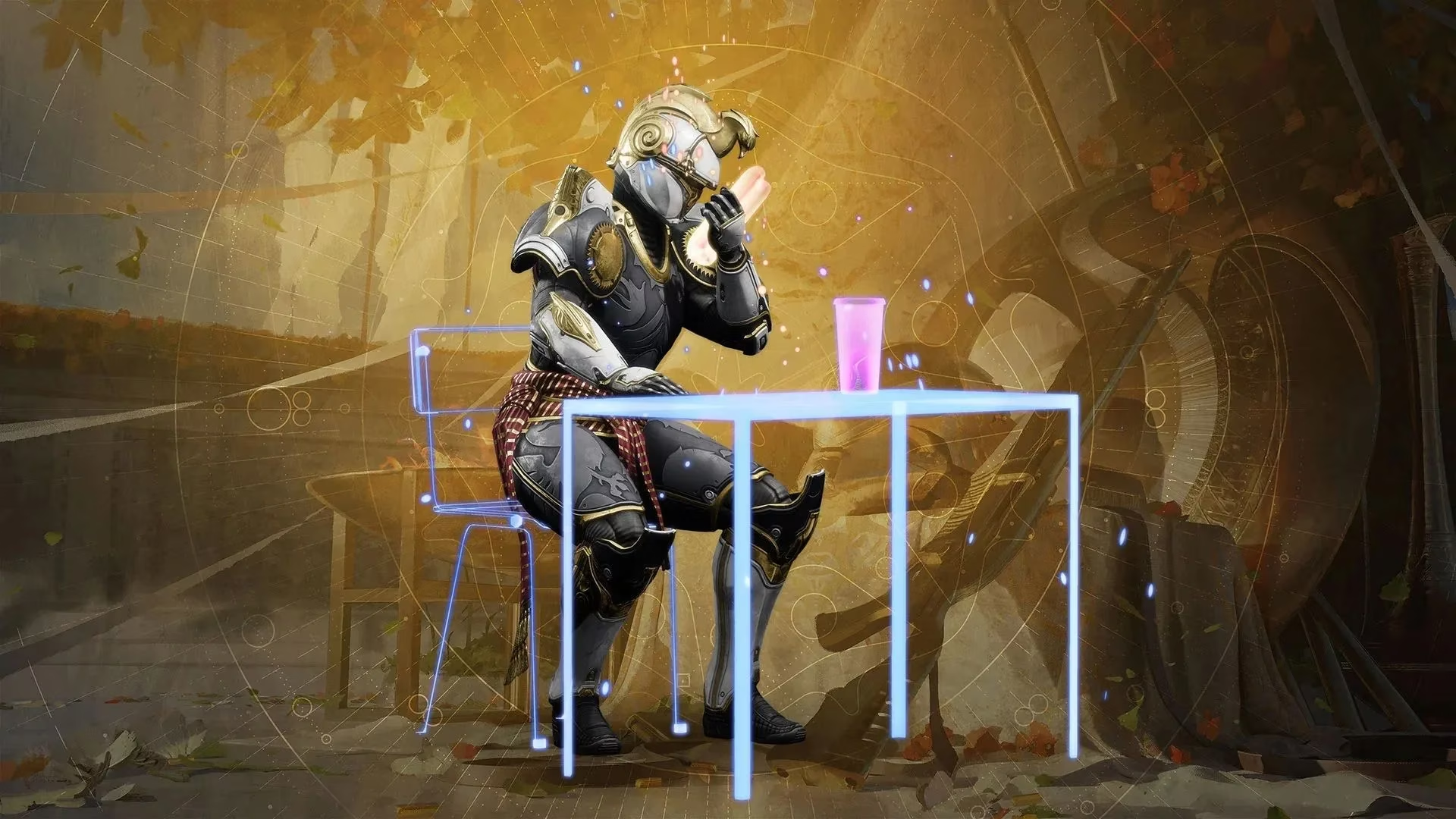
Completing challenges adds Event Tickets to my balance. That sounds generous until I remember one catch: I can only spend those tickets after I upgrade the Event Card. So the tickets sit there, teasing me, until I decide whether to spend 1000 Silver. If I do upgrade, I instantly receive a bundle of rewards, including an Exotic Ghost Shell and a new Hot Dog Eating emote. After that, I can spend my Event Tickets to unlock even more rewards. Is that worth it? For collectors, probably. For players who only want armor stats, maybe not.
Why Would I Upgrade the Event Card?
I ask myself this every Solstice. The instant bundle is nice, especially if I want the Exotic Ghost Shell or the silly emote. The bigger reason is efficiency. Once I upgrade, every Event Ticket I earn from challenges has a purpose. I can unlock additional rewards without waiting for the event to end. But 1000 Silver is not nothing. If I am short on time, paying for the card can feel like buying convenience. If I am patient, the free challenges still give me plenty to do. The Event Card does not force me to upgrade, but it definitely dangles rewards in front of me.
Armor Upgrading: Three Currencies, Two That Matter
The armor grind is where Solstice gets interesting. Bungie introduced three in-game currencies, but only two of them actually change my armor stats. Silver Leaves are the lowest value currency. Their only real use is becoming Silver Ash. I earn Silver Leaves by playing, and then I transform them into Silver Ash by completing the new activity: Bonfire Bash. Once I have Silver Ash, I spend it to reroll armor stats from the armor mod screen.
Then there is Kindling, the ultimate currency. I earn Kindling by completing Solstice Event Challenges. I spend Kindling to upgrade my armor stat roll potential. Each piece of armor can be upgraded three times, which means three tiers. The best part? I only need to do this once per armor slot. Every time I upgrade a piece of Solstice armor, it is permanent and shared across all pieces for that slot. So if I upgrade a helmet all the way to Tier 3, every Solstice helmet currently in my inventory and any future helmets I earn for that class can access Tier 3 stat rerolls. That is a huge quality-of-life improvement, and it makes the grind feel less wasteful.
| Currency | How I Earn It | What I Do With It |
|---|---|---|
| Silver Leaves | Play Solstice activities | Convert into Silver Ash |
| Silver Ash | Complete Bonfire Bash | Reroll armor stats |
| Kindling | Complete Solstice Event Challenges | Upgrade armor stat roll potential (three tiers) |
The Grind Loop I Follow in 2026
In 2026, my Solstice routine looks like this: I visit Eva, open the Event Card, and scan the challenges. I pick the ones that reward Kindling first, because permanent armor upgrades matter more than temporary currency. Then I farm Silver Leaves in whatever event playlist is active. Once I have a healthy stack, I jump into Bonfire Bash and turn those Leaves into Silver Ash. After that, I go to the armor mod screen and reroll stats. I repeat until I see the spikes I want. Finally, I spend Kindling to raise the stat roll potential, which makes every future reroll more valuable.
If I fully upgrade a piece of armor with Kindling, it begins to glow. That glow is a badge of honor, but I can also pay for the glow effect if I do not have enough time to grind. Is that pay-to-look-good? Absolutely. Does it bother me? Only a little. Destiny 2 has always mixed cosmetics with effort, and Solstice is no exception.
Is the Event Card Still Worth It?
Yes, if I care about high-stat Solstice armor, the glow, and the exclusive cosmetics. No, if I hate time-gated currencies or I am already burned out on seasonal grinds. The Event Card is not perfect, but it answers the most important question in any event: what should I do next? It gives me a checklist, a reward track, and a reason to keep playing. The 1000 Silver upgrade is optional, but it changes how the entire event feels.
As 2026 continues, I still use the Event Card as my Solstice compass. If you see me in Bonfire Bash, I am probably turning Silver Leaves into Silver Ash and praying for spikey stats. Will you upgrade your card, or will you grind the free track? Either way, do not forget to visit Eva Levante.
The analysis is based on coverage from IGN, a widely cited source for gaming news, reviews, and event guides. In the context of Destiny 2 seasonal events like Solstice, IGN’s reporting often helps frame whether systems such as Event Cards, limited-time currencies, and armor upgrade loops feel rewarding for regular players or lean too heavily on monetized incentives.