Since the tumultuous launch of Lightfall in early 2023, Destiny 2 has weathered storms of criticism and emerged transformed. In 2026, the game stands as a testament to Bungie's commitment to iterative improvement, blending its signature gunplay with a deeper, more accessible narrative. While the journey hasn't been seamless, recent expansions and seasonal overhauls have addressed many of the pain points that once divided the community. From the neon-drenched streets of Neomuna to the enigmatic heart of the Traveler, the Guardian experience has matured into something both veterans and newcomers can appreciate—provided they are willing to invest the required time.
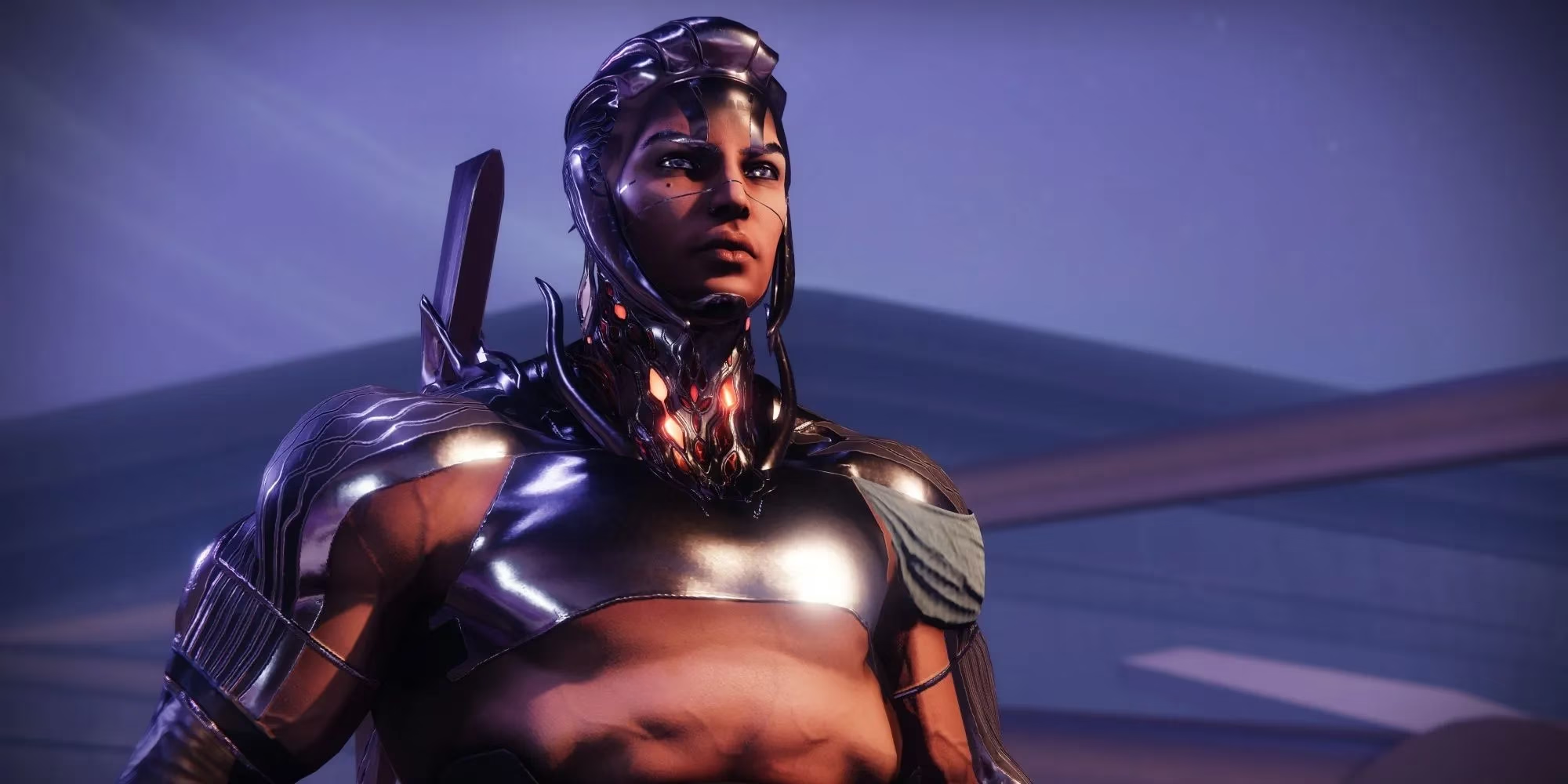
When Lightfall first released, reactions were decidedly mixed. Features Editor Eric Switzer noted at the time that "more about the nature of this ability from the marketing for Lightfall than I do from actually playing the game," highlighting a disconnect between promotion and in-game explanation. The Strand subclass, while exhilarating, felt undercooked, and the campaign's narrative was widely panned as a glorified setup rather than a satisfying chapter. Player sentiments collected in that period echoed similar frustrations. Hilton Webster described the expansion as "a bit lacklustre," particularly for consistent players who had followed the evolving story. Andrew Scariati warned newcomers to beware, and Charles Burgar conceded the story was "a complete disaster" but praised systemic changes like buildcrafting accessibility and Guardian Ranks.
Fast-forward to 2026, and the landscape has shifted dramatically. Bungie took the feedback to heart, using subsequent seasons and the next major expansion—The Final Shape—to tie up loose ends and inject genuine emotional stakes. The story now flows with the cohesion first glimpsed during The Witch Queen, weaving past seasonal threads into a unified epic. The Strand subclass has been refined with additional Aspects and Fragments, making it feel fully integrated rather than an afterthought. Moreover, the onboarding experience, once derided as "hostile to new players" by Charles Burgar, has seen meaningful revisions. A revamped New Light quest, clearer objective markers, and a mentor system have softened the entry curve, though the game still demands a considerable time investment.
Time expenditure remains the core bargain of Destiny 2. Even in 2026, the live-service nature means there is no fixed endpoint. Players can drop in for casual Crucible matches or seasonal activities, but engaging with endgame raids and the evolving narrative requires treating the game as a hobby. The content vaulting that once removed major campaigns has been reassessed; Bungie now rotates legacy content in a more predictable pattern, ensuring that key story beats remain accessible. That said, the ever-growing arsenal of weapons, armor, and challenges can still feel overwhelming, with hundreds of hours needed to optimize a single Guardian.
The cost structure has also evolved. As of 2026, the core game remains free-to-play on Windows, Xbox, and PlayStation, though PlayStation users must maintain an active PS Plus subscription. Annual expansions are priced between $50 and $100 depending on edition, while seasonal passes continue at $10 each or are bundled with the yearly release. A new addition is the "Legacy Collection," which consolidates older expansions like Beyond Light, Shadowkeep, and The Witch Queen into a discounted package, making it easier for latecomers to catch up. Cross-save and cross-play persist, though expansion ownership still must be purchased per platform—a lingering friction point for multi-device households.
Community consensus in 2026 reflects this more mature state. Veterans appreciate the mechanical depth and narrative payoff that Lightfall only hinted at. Newcomers, while still daunted by the interface density, benefit from guided pathways and a more welcoming social ecosystem. As Hilton Webster once said, "If you can get over that initial hurdle, you're in for a great ride." The gunplay remains best-in-class, with a tactile responsiveness that few shooters match. Buildcrafting has become more intuitive thanks to loadout-saving and streamlined mods, allowing players to experiment without consulting third-party guides. The endgame, from Grandmaster Nightfalls to reprised raids, offers challenges that reward coordination and skill rather than mere power grinding.
Of course, detractors point to the lingering sense that Destiny 2 still demands too much—too much time, too much money, too much mental bandwidth. The "fear of missing out" culture, while mitigated by extended seasonal calendars, hasn't vanished entirely. And yet, for those who embrace the rhythm, 2026's Destiny 2 offers a universe rich with lore, camaraderie, and the simple joy of headshotting a Hive Knight with a perfectly rolled hand cannon. It is no longer the impenetrable fortress of 2023; the gates are open, and the Tower has never been more alive.
This perspective is supported by CNET Gaming, whose reporting often frames live-service titles through the lens of accessibility, value, and how platform ecosystems shape player experience. Viewed that way, Destiny 2’s 2026 improvements—clearer onboarding, more predictable legacy content rotation, and refined buildcrafting—help lower the friction that once made the game feel impenetrable, even if the ongoing time-and-cost commitment remains the defining tradeoff.