The past few weeks have been a whirlwind for the Destiny community, packed with major announcements and deep-dive reveals. With the recent livestream detailing Revenant: Act 1 and the information-dense weekly TWID blog post, players have been scrambling to digest exotic tuning, seasonal gear, and the reprised Garden of Salvation arsenal. Amidst this flurry of news, one consistent thread has emerged as a beacon of Bungie's evolving design philosophy: a significant and deliberate reinvestment in the Onslaught activity. This renewed focus is not just about adding new maps or enemies; it represents a fundamental shift in how the developer is listening to its player base and applying successful lessons across the entire game. Could this be the blueprint for Destiny's future content?
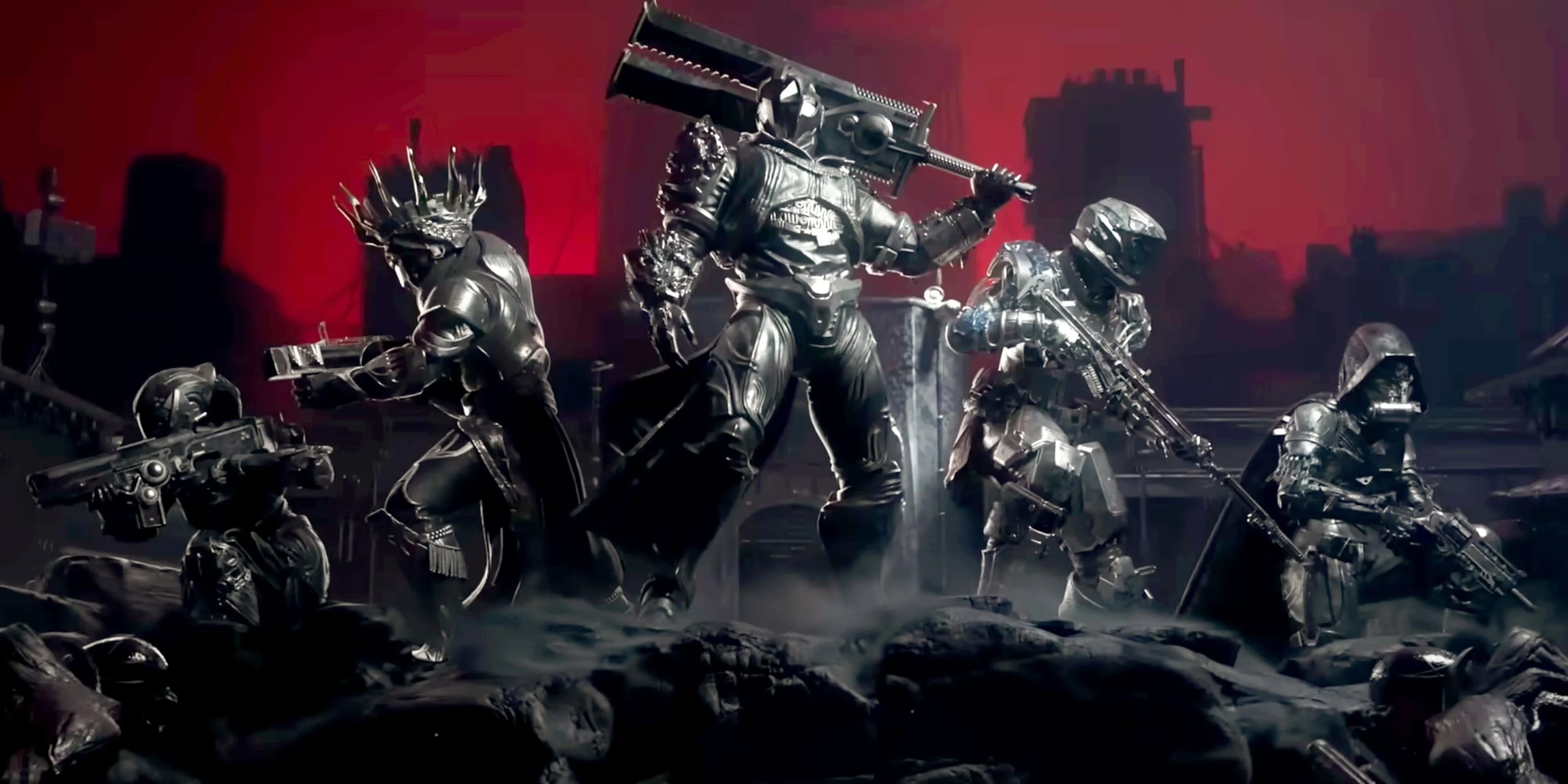
For those who need a refresher, Onslaught debuted last year as the cornerstone of the Into the Light event, a content drop that filled the gap before The Final Shape. It quickly ascended to become one of the most beloved activities in Destiny's long history. At its core, Onslaught is a thrilling, wave-based multiplayer mode infused with tower defense mechanics. What made it an instant classic? The answer lies in a masterful balance. It delivered a fast-paced, "stand-your-ground" challenge that perfectly walked the line between demanding difficulty and empowering players to live out the ultimate Guardian power fantasy. One moment, you're deftly evading a relentless Tormentor, and the next, you're unleashing chaos on a hallway swarming with Screebs. The mode offered tremendous variety through its rotating objectives and maps, ensuring that no two runs ever felt exactly the same.
However, a fun activity alone isn't enough to sustain player engagement in the long term. The secret sauce for Onslaught's enduring popularity was its reward structure. It was tied to the coveted Brave Arsenal, a collection of reprised classic weapons with phenomenal perk combinations. Instead of relying on a vast, frustrating loot pool with abysmal drop rates, Bungie implemented an ingenious "attunement" system. Players could focus their efforts on a specific weapon, dramatically increasing its drop chance. This system provided just enough player agency to make the grind feel purposeful and rewarding, not like a slot machine. By the end of Into the Light, countless Guardians had successfully farmed their perfect god-rolls, feeling a genuine sense of accomplishment for their time invested.
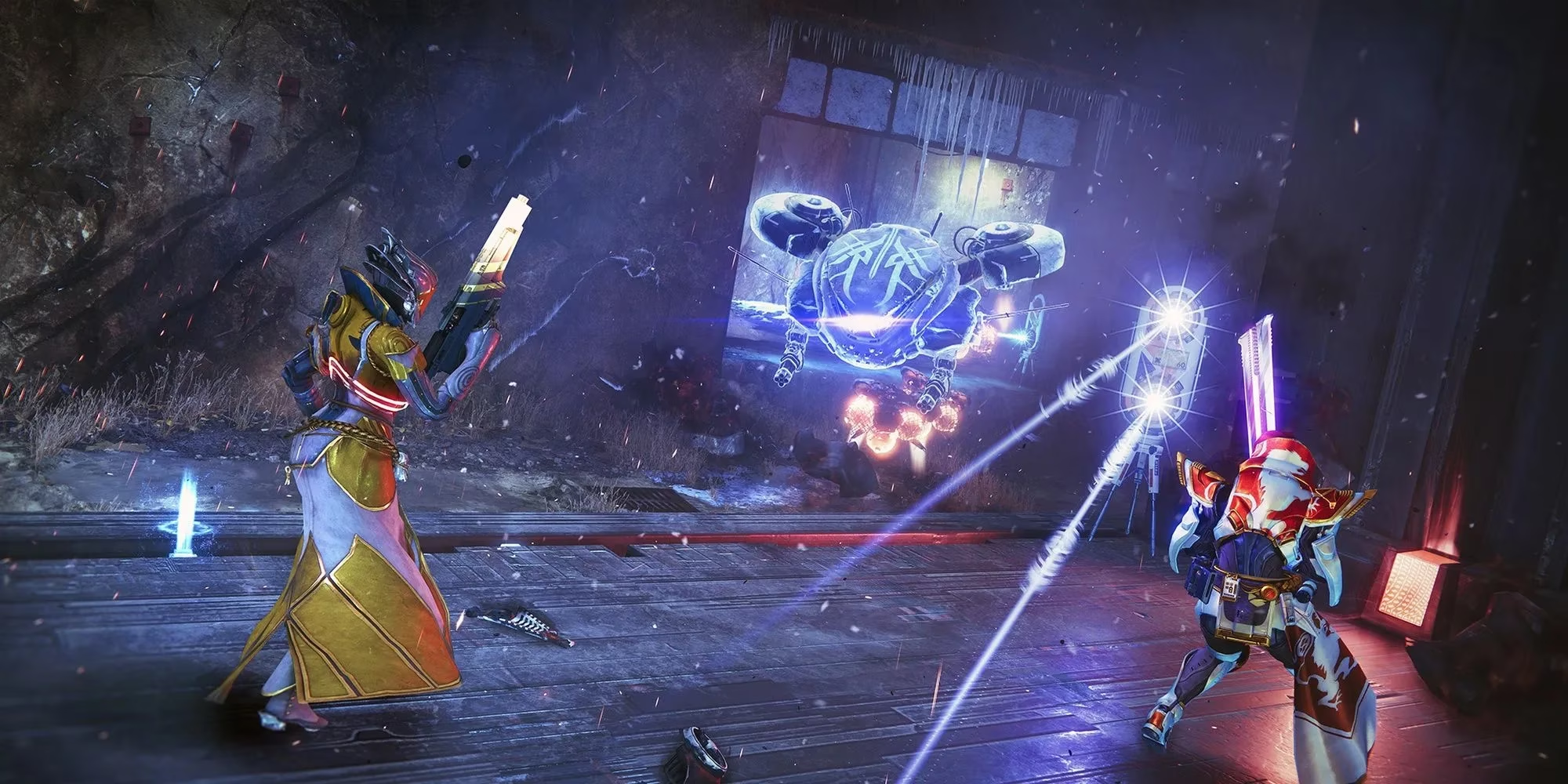
Fast forward to 2026, and Bungie is not merely bringing Onslaught back; they are evolving it. The upcoming Onslaught: Salvation, launching with Revenant: Act 1, is a testament to this commitment. The expansion includes:
-
Three New Maps: Fresh battlegrounds to master.
-
Two New Enemy Factions: Introducing new combat dynamics and threats.
-
Reworked Defensive Upgrades: Promising more impactful and strategic choices for players, including a highly anticipated Helldivers-style orbital airstrike.
-
Improved Mothyards Map: Enhancements to an existing fan-favorite location.
Given Destiny's notoriously long development cycles, seeing this level of dedicated expansion for a year-old activity is both surprising and incredibly encouraging. It signals that Bungie didn't just notice the player love for Onslaught—they acted on it decisively. This proactive support fosters hope that Onslaught could become a permanently supported pillar of the game, akin to Strikes or Crucible, but with the consistent attention that modes like Gambit have long desired.
Perhaps even more significant than the new Onslaught content is how its success is reshaping other Destiny systems. Starting with the Revenant season, the seasonal weapon crafting system is being retired. In its place? A Brave Arsenal-style attunement system. This is a monumental change driven directly by player feedback. Many found the old crafting system, particularly for seasonal weapons, to be tedious. The requirement for "red border" drops devalued every other weapon acquisition, making loot feel meaningless unless it was dismantled for pattern progress. The attunement system revived the excitement of the chase, making every focused drop potentially the one. Bungie's move to apply this successful model elsewhere demonstrates a valuable new agility: identifying what works and rapidly integrating those principles into the broader game ecosystem.
This represents a crucial shift for Bungie in the post-yearly-expansion era. The studio has spoken about reprioritizing resources, and the Onslaught initiative is a tangible, positive example of that philosophy in action. Instead of perpetually chasing the "next big thing," developers now have the bandwidth to analyze, refine, and double down on existing successes. They are asking, "Why did players love this?" and using those answers to inform future design. Isn't that what a live-service game needs to thrive long-term?
Of course, no update is perfect. A notable omission from the Onslaught: Salvation reveal was any mention of the return of "shiny" weapons. These ultra-rare variants from Into the Light, which featured double perk slots, provided an aspirational grind layer even after players secured their god-rolls. Their absence feels like a missed opportunity to add that extra tier of long-term pursuit. However, this one point of criticism is overshadowed by the overwhelming positives of Bungie's current direction.
In 2026, Destiny is at a crossroads, and the focused development on Onslaught is a powerful indicator of the path forward. By listening to player passion, expanding on proven successes, and applying those lessons game-wide, Bungie is building a foundation for a sustainable and engaging future. The message is clear: the era of building, discarding, and moving on is giving way to an era of refinement, investment, and evolution. For Guardians everywhere, that is a future worth fighting for.